
Have you ever walked through a shopping district and received a notification from a nearby shop? Maybe it was the just-opened branch of your favorite clothing store, or a brand celebrating its anniversary with 20% off on everything that day. Regardless, you learned something was happening nearby, and geofencing made that possible.
Geofencing is part of the broader field of location-based advertising, which allows businesses to reach people where they are in the real world through various technologies. With almost everyone carrying their phones everywhere, retailers can turn to geofencing marketing for a range of benefits.
 How Geofencing Works
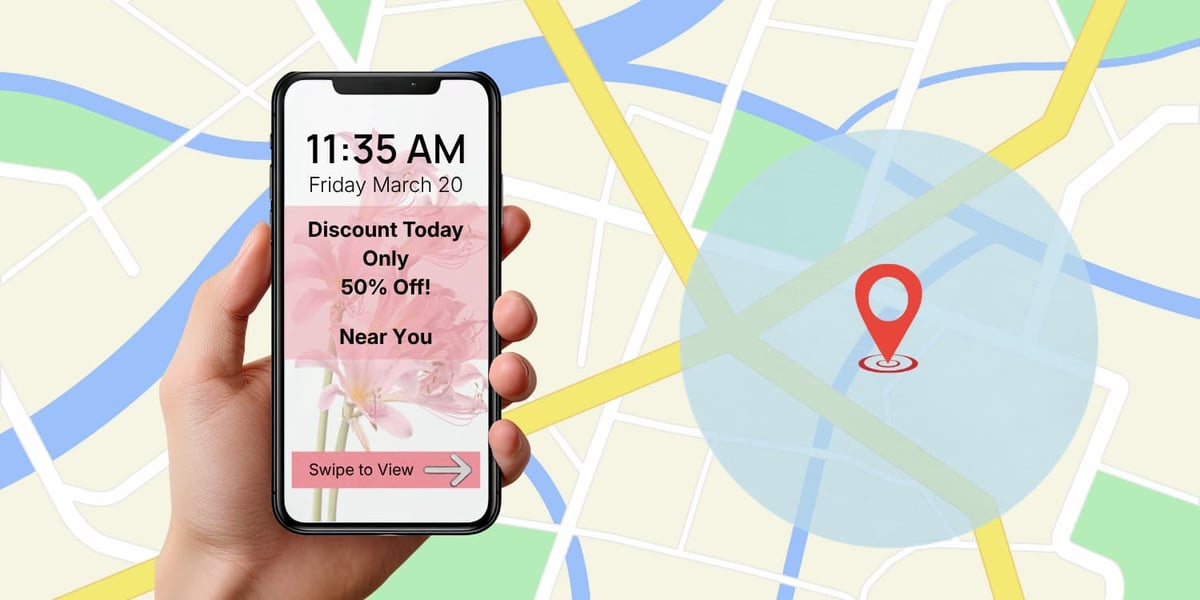
Geofencing uses communication technologies such as GPS signals, RFID tags, Wi-Fi networks, or cellular data to determine a device’s location. For location-based advertising, you can set up a virtual geographic boundary, or geofence, which can be as small as a single storefront or building or as large as an entire city or ZIP code. Then, when a device enters or leaves this area, you trigger a specific action, whether sending a push notification or delivering an ad.
Most geofences are created by drawing a circular radius around a location using mapping tools and application programming interfaces (APIs) built into mobile apps or marketing platforms. Many platforms also integrate satellite imagery and mapping tools similar to Google Earth, while others rely on latitude and longitude coordinates or custom user-created maps.
 Use Cases for Retail Digital Marketing
How does geofencing support retail digital marketing? Here are ways brands use the technology to get customers in meaningful ways:
- Store Visits: Geofencing helps you connect with people who are near your brick-and-mortar retail store. Instead of targeting a broad audience, you keep your eyes on those who can stop by as soon as they can. Turn casual foot traffic into actual store visits.
- Competitive Conquesting: Businesses may set up geofences around competing stores to position themselves as an alternative. However, be careful with delivering ads that feel intrusive. This approach only works if the target customer is already in the mindset to shop for what you offer.
- Events and Promotions: Are you hosting an in-store event, product launch, or seasonal promotion? Send reminders or notify people about your limited-time discounts through location-based advertising! Since they are physically present at the occasion, the chances of their participating are higher.
- Foot Traffic: How many people actually walk into your store after receiving a geofencing notification or ad? If more visitors show up during a campaign period, your messaging is driving real-world results.
- Redemption: If a campaign includes digital coupons, promo codes, or special in-store deals, track how often those offers are redeemed. From there, dig deeper by calculating cost per acquisition and return on ad spend (ROAS) to justify or adjust the investment.
- Incremental Lift: Look at the additional results that your campaign brings. How many of the purchases would have still happened without geofencing? By isolating the extra conversions, you figure out which strategies are actually driving new growth.
- Attribution: Evaluate all the touchpoints a customer interacts with before finally entering your shop. A mobile ad, push notification, or a website visit might be the biggest influence in their decision, and finding out helps you refine your tactics.
 Geofencing Marketing Privacy and Consent Considerations
There is no question that geofencing marketing can create more personalized experiences for shoppers and retailers. Responsible use is crucial, though.
Regulations
Over the past several years, governments have introduced regulations to protect consumer data. In the European Union, for instance, the General Data Protection Regulation (GDPR) requires companies to get explicit consent before collecting or processing personal data, including location information.
In the United States, laws like the California Consumer Privacy Act (CCPA) give people the right to understand what personal data is being collected and to opt out of its sale or sharing. Connecticut’s Data Privacy Act (CTDPA) places limits on geofencing near certain sensitive locations, such as healthcare facilities.
All these rules must guide your location-based advertising strategies. Incompliance will result in fines and long-term reputation damage.
Platform Policies
Technical risks are real. Location data exposed in a breach could reveal someone’s movement patterns or location history, potentially leading to harassment, stalking, or other malicious activity. As such, companies need strong security platform policies. Protect stored data, limit access, and build systems that minimize unnecessary data collection.
User Expectations
Not everyone likes the idea of being tracked. That said, transparency is a gift you give to the people you wish to reach. Clearly explain how your apps use location data and what customers receive in return. When a user shares their location, they should feel comfortable and confident that they will receive something valuable.
 Measuring Geofencing Marketing Success
Like any retail digital marketing effort, geofencing marketing success depends on tracking the right metrics, such as the following:
- Foot Traffic: How many people actually walk into your store after receiving a geofencing notification or ad? If more visitors show up during a campaign period, your messaging is driving real-world results.
- Redemption: If a campaign includes digital coupons, promo codes, or special in-store deals, track how often those offers are redeemed. From there, dig deeper by calculating cost per acquisition and return on ad spend (ROAS) to justify or adjust the investment.
- Incremental Lift: Look at the additional results that your campaign brings. How many of the purchases would have still happened without geofencing? By isolating the extra conversions, you figure out which strategies are actually driving new growth.
- Attribution: Evaluate all the touchpoints a customer interacts with before finally entering your shop. A mobile ad, push notification, or a website visit might be the biggest influence in their decision, and finding out helps you refine your tactics.
Connection Model’s Approach to Retail Digital Marketing
Location-based advertising is incredibly valuable in this mobile-first world. Modern retail digital marketing teams now have all the chances to maximize geofencing. Do it right, and it will be powerful. Do it wrong, and it will cause more harm than good. Respecting customer privacy and expectations should never be just an afterthought.
At Connection Model, we help businesses design and manage effective geofenced campaigns through solid strategy, creative messaging, accurate audience targeting, and analytical performance reviews. If the goal is to get to the right shoppers at the right time, we are the partner you are looking for.
Do you want to bring more shoppers through your doors? Promise and deliver the experience they deserve! Ask Connection Model about a pilot geofencing campaign.
Written By: David Carpenter