
Most customer experiences are messier than we would like to admit. Sales teams might have a solid process, and the support teams might have the best scripts, but if neither actually leads a customer to where they want to go, then what is the point?
Fragmented journeys create inconsistent experiences that drive customers away. Since every effort you make comes at a cost, you also suffer from wasted spending. As such, mapping your audience across all touchpoints matters.
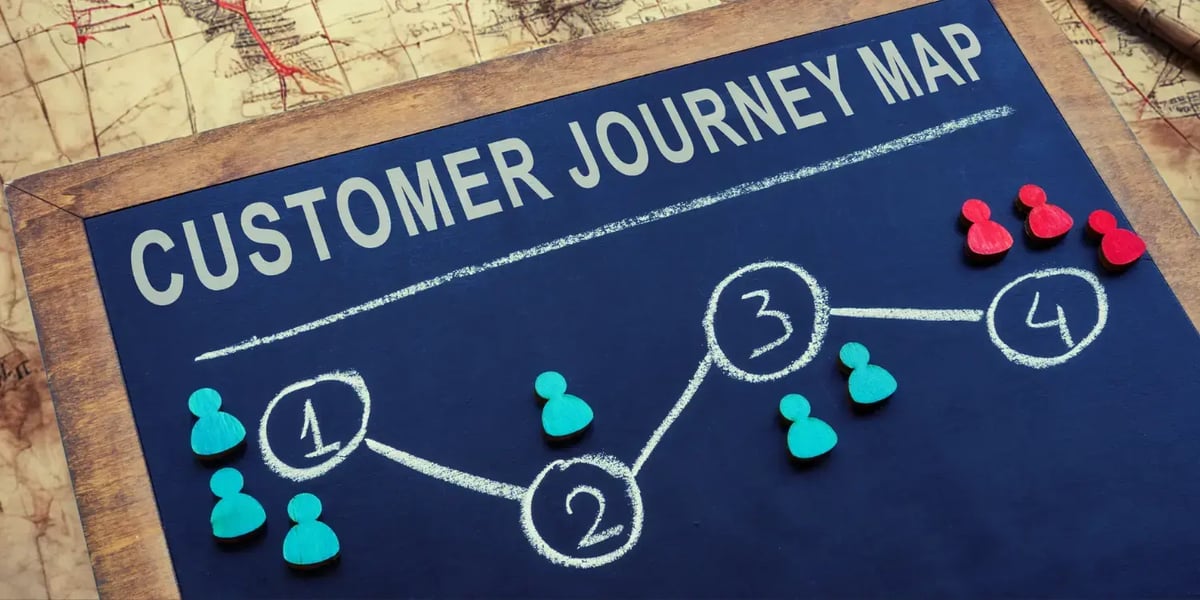
 What Is a Modern Customer Journey Map?
A customer journey map is simply a picture of what it is like to do business with you. It shows what your customer experiences from the moment they realize they need something to the moment they become loyal to you (or leave you).
Businesses often mix up the buyer journey and the customer journey, but they are different. The buyer journey is the path almost everyone takes, whether or not it involves your brand. The customer journey, on the other hand, is specific to your company.
 The Data Sources You Need
No, you cannot build a customer journey map by imagining or guessing. What your customers go through is real, not fiction. Mapping, then, is pulling data from the right sources. Here are five of them:
- Web Analytics: Find out which pages of your website your prospects and customers land on, how long they stay, where they drop off, what they click, and what they ignore.
- CRM: Your customer relationship management system tracks interactions you have had with prospects and customers across departments, revealing where someone is in their lifecycle.
- CDP: A customer data platform is your identity engine. It collects website behavior, transactions, demographic details, and campaign engagement, and stitches them together into a unified customer profile.
- Offline Data: It is easy to forget that not everything happens online. Look at in-store purchases, phone conversations, event attendance, direct mail responses, and manually gathered demographic information, too. Learn how digital behavior relates to real-world interactions.
- Support Systems: A marketing decision support system helps you analyze historical data and simulate scenarios to enable smarter decisions. It typically includes a database, analytical models, and various dashboards.
 Visualizing Customer Journeys
Your customer journey map is your framework. It is your guide in optimizing your strategies, and it all starts with a visual exercise. Your whiteboards might drown in sticky notes, and many days might be all about having honest conversations, but it will all be worth it.
What does a map really entail?
Personas
Of course, customer maps have personas or detailed, human profiles that represent your key audiences. They involve your prospects’ and customers ’ motivations, the pressures they face, and their different definitions of “success.”
Journey Stages
Yes, every customer journey includes the buyer journey. It follows recognizable phases: awareness, consideration, purchase, retention, and advocacy. However, again, it is unique to your company.
What triggers awareness about your brand? What questions surface during consideration of your services? What hesitations arise before the purchase of your products? What drives a prospect to trust you?
Touchpoints
Touchpoints are the specific moments someone interacts with your brand. They are the website visits, demo requests, sales calls, emails, social posts, and customer support chats. Touchpoint analysis lists these interactions and evaluates them.
Assess the consistency of your messaging and the smoothness of the connection from one channel to the next.
Emotions and Pain Points
Your customers’ emotions at every stage and touchpoint matter because they influence their decisions. If they are curious during a website visit, they will keep clicking. If they end up frustrated during a call, they will hang up. If they feel supported during a demo, they will use your product.
 Turning Your Customer Journey Maps Into Action
You go through a lot while mapping the customer journey. You look for a template, set objectives, profile your personas, do a touchpoint analysis, and more until you finally have that map.
Breaking news: That is only the beginning. Whatever you build is a tool you must use, not a photo you get framed and hang on the wall. Here is how you actually act on it.
Prioritize Fixes
Your map will tell you what is making your foundation shaky. You cannot proceed to journey orchestration and omnichannel marketing with a weak foundation, right?
So, unify the multiple versions of the same customer in different systems. Connect the disconnected channels, tighten team processes, and get automations out of the silos. Clean everything up first.
Orchestrate Campaigns
Once your foundation is solid, you can design smarter campaigns. For instance, when someone downloads an eBook, follow up with relevant content. When someone visits your pricing page twice, launch your sales outreach team.
Maps help ensure all your moves are intentional.
Align Teams
Siloed teams use siloed systems, and siloed systems mess up customer experiences. Using your map, place your teams in the same world so everyone understands where they stand and how their actions affect the overall journey.
Without a team member being lost, the chance of losing a prospect is lower.
 Customer Journey Mapping With Connection Model
At Connection Model, we focus on helping B2B and B2C companies grow revenue, generate qualified leads, and acquire profitable new customers through measurable, accountable marketing. Our approach to customer journey mapping is hands-on and practical.
We hold workshops to educate teams, conduct thorough data audits, and create execution plans tied directly to your KPIs. We are with you from touchpoint analysis to omnichannel marketing.
Do you want a single view of your customer journey? Partner with Connection Model to build an actionable journey map.
Written By: David Carpenter